"Our greatest responsibility is to be good ancestors."

-Jonas Salk

Monday, September 7, 2009

Try Again; Your Objective Opinion Was Too Subjective

I think I never blogged about this Peggy Noonan blurt. I saw her name today and it came to mind again, in all its blazing glory.
Thursday, July 20, 2006 12:01 A.M. EDT

During the past week's heat wave--it hit 100 degrees in New York City Monday--I got thinking, again, of how sad and frustrating it is that the world's greatest scientists cannot gather, discuss the question of global warming, pore over all the data from every angle, study meteorological patterns and temperature histories, and come to a believable conclusion on these questions: Is global warming real or not? If it is real, is it necessarily dangerous? What exactly are the dangers? Is global warming as dangerous as, say, global cooling would be? Are we better off with an Earth that is getting hotter or, what with the modern realities of heating homes and offices, and the world energy crisis, and the need to conserve, does global heating have, in fact, some potential side benefits, and can those benefits be broadened and deepened? Also, if global warning is real, what must--must--the inhabitants of the Earth do to meet its challenges? And then what should they do to meet them?

You would think the world's greatest scientists could do this, in good faith and with complete honesty and a rigorous desire to discover the truth. And yet they can't. Because science too, like other great institutions, is poisoned by politics. Scientists have ideologies. They are politicized.

All too many of them could be expected to enter this work not as seekers for truth but agents for a point of view who are eager to use whatever data can be agreed upon to buttress their point of view.

And so, in the end, every report from every group of scientists is treated as a political document. And no one knows what to believe. So no consensus on what to do can emerge.

If global warming is real, and if it is new, and if it is caused not by nature and her cycles but man and his rapacity, and if it in fact endangers mankind, scientists will probably one day blame The People for doing nothing.

But I think The People will have a greater claim to blame the scientists, for refusing to be honest, for operating in cliques and holding to ideologies. For failing to be trustworthy.
See? It's our fault after all! Because, if we hadn't been all ideological about the physical properties of the biosphere, and corrupted the process where all the world's scientists got together to be serious about it, we could have explained to everybody that it was somewhere around 2.5 to 3 C per doubling, and that we really ought to have stopped at 350 ppmv, but there's still barely time to stop at 450 ppmv, and we'd better get on it.

But because we ideologically INSISTED that it was somewhere around 2.5 to 3 C per doubling, and that to be on the safe side we really ought to have stopped at 350 ppmv, but there's still barely time to stop at 450 ppmv, and we'd better get on it because that might be less than totally catastrophic, and because we had big serious meetings where everybody pretty much agreed on those things, nobody is going to believe us.

So it's our fault. If only we had been more flexible about that sensitivity!

Sunday, September 6, 2009

Saying Things Twice

I enjoy the southern habit of saying things twice, for emphasis. Southerners often say things twice, for emphasis.

Here's an example:

9/1/09 Associated Press

Drought in Central Texas is taking toll on trees

Experts blame the lingering Texas drought for an increasing number of dead trees.

Trees throughout Central Texas, including native species such as live oak and hackberry, have succumbed to drought and intense summer heat, arborists and foresters said.

"I have not seen it to this extent in my lifetime," said Jim Houser of the Texas Forest Service. "We're even seeing cedars (Ashe junipers) dying. They can exist on sunbaked, rocky plantscapes. And we're seeing them die all over the place."

Hundreds of the city's estimated 300,000 trees have died this summer, said Walter Passmore, urban forester for Austin.

The Austin American-Statesman reported Tuesday that the city this month plans to cut down nearly 50 trees in Zilker Park that were determined to have been killed by drought.

Dead trees on city property are cut down and turned into mulch, Passmore said. Trees on private property in urban areas are typically cut down so that they don't fall down and cause damage.

Don Gardner, an arborist who runs a consulting company in Austin, said he's had so many calls about sick trees that it's difficult to keep up with the work.

"Many of our well-established, well-adapted native trees are dying," Gardner said. "From last year to this year, it's really kicking in."

Houser said the death of a tree is usually attributed several factors, among them disease and insects. Stress from the drought and heat is often the fatal blow, he said.

"Apparently completely healthy, vibrant oaks are going down," Houser said. "There is just absolutely no water in the soil. There's just no water there."

It's a nice example. It's just that I wish he had something different to emphasize. I truly wish he had something else to be emphasizing.

Here's a view of my neighbor's backyard facing the creek. (The Fort Branch Creek in Austin TX) You can see several dying or dead trees. (Note to Canadians: trees don't normally turn by labor day in south central Texas) Trees on private property are watered, but trees on public property are all severely stressed.


Trees in Austin which are not watered using municipal water are severely stressed.

Retrograde Anti-Green Decision out of FHA

Austin Contrarian has a gripe:

FHA is about to adopt new rules explicitly encouraging home buyers to purchase single-family, detached housing in the suburbs rather than attached (condos) in urban cores:

Until now, almost any condo development could apply to FHA for “approved” status, therefore making FHA financing available in that development. In addition, in developments that were not approved, “spot approvals” were sometimes available for individual units. (The lender applied for an approval for the unit you wanted to buy, in spite of the development not being approved).

...


2. All development not considered primarily residential are out. For instance, a development with more than 25% of the total floor area dedicated to commercial business use is out.

3. Noise issues is a new concern, so any development within 1,000 feet of a highway, freeway, or heavily travelled road, 3,000 feet of a railroad, 1 mile of an airport, or 5 miles of a military airfield will become ineligible for approval.

4. If the property has an “unobstructed view , or is located within 2000 feet of any facility handling or storing explosive or fire prone materials, it is not insurable - we're not talking just fireworks factories here. A gas station 2 blocks away can disqualify this development.

...

11. All current condominium project approvals will be invalid (with the exception of projects approved on or after October 1, 2008) and projects must be re-approved under the new options available.

But these new regulations seem purposely designed to push new homeowners out of dense, urban areas to the suburbs. They exclude many mixed-use developments (#2). In a central city, it is hard to find a condominium not within 1,000 feet of a highway, freeway, or heavily travelled road, 3,000 feet of a railroad, or one mile from an airport (#3). Allowing developers to tap into FHA guarantees for entire single-family subdivisions but only 30% of condominium units naturally will encourage developers to shift to single-family subdivisions. These new regulations are fundamentally anti-urban.

Even if it is somehow possible to defend our existing scheme of suburban subsidies, is it really possible to defend introducing new market distortions?


The last thing I expected from Obama is an anti-urban, and obviously explicitly anti-Chicago pro-Schaumbourgeoisie policy. What is going on here?

Somebody phone da mare!

Saturday, September 5, 2009

On Developing Better Immunity to Bullshit

I have been gearing up to present an engineer's model of climate change forever. It will be quite a project.

In brief,  a well engineered system is a sort of circulatory system, a "closed loop" where anything that might get out of line has corrective mechanisms built in. Those corrections, though, require effective communication channels between the sensors, the actuators, and the control system.

It seems that most of our problems nowadays have something to do with noise in the communication channels.

When we look at the linkage between society and climate we see communication channels that involve solid but counterintuitive information. The chief disciplines of bullshit, i.e., law, politics and advertising, have developed a culture that is very good at misdirection, to the point where the best information not only doesn't win out, arguably truth is at a disadvantage.

The problem is very clearly about the noise in the communication channels, and so the engineer's analogy is the "filter". Often you hear about "filtering" in discussions about making better use of the internet, a conversation that is now in some circles getting the peculiar name "curation" by analogy to the job of a museum director, I guess. But this analogy is appropriate for the arts, not the sciences. We don't seek someone with highly developed tastes helping us to direct our attentions.

In matters of fact rather than of taste, we seek powerful mechanisms for weeding out bullshit. (Organizing the non-bullshit is also a huge problem, but it seems to me crucial to clean the stock before sorting it.)

In contemplating this I find myself moving away from an engineering model and toward a biological one. The immune system is charged with distinguishing between "self" and "not-self"; too many false positives and too many false negatives both lead to pathologies. It functions using a large number of autonomous units that behave, in aggregate, differently toward truth and non-truth.

In fact, political enthusiasts offer us a model. Their units, their white blood cells, are enthusiasts for their position. They troll the net for evidence and argument corroborating their opinion and select and share it, providing reinforcement for each other and steeling themselves for battle against the opposition.

(The befuddled US press, still living in a world where political parties were relatively connected to a sane democratic process, are falling off a cliff in offering echoes of the two resultant streams of essentially worthless noise.)

The immune system we need is more subtle, selecting on validity rather than political implication. It seems to me that it can neither fall to experts acting alone (who are overwhelmed by the scale of the noise) nor to amateurs acting alone (who are prey to the bullshit) but will require some organizational structure.

--
Images: feedback diagram: Moveleft.org ; white blood cells at an infection site: CEMRF (microscopy) at University of Iowa

"I May Die Before I Repay That Loan"

The New York Times has an article about drought, groundwater depletion, and subsistence agriculture in India. This affecting anecdote is included:

To the eye, the drought can be deceptive. In Pipri Village, as in other areas, greenery is evident, even as nearly every field without irrigation is stunted.

In recent days, rains have returned to Pipri and some other areas, but not in time to save the summer, or kharif, crop. Located three hours from the high-tech center of Hyderabad, Pipri is one of thousands of Indian villages decimated by the drought.

On a recent afternoon, Mrs. Bai, the widow, stood at the edge of her ragged seven acres, her toes caked in dirt as she motioned to the remains of the pyre used to cremate her husband four months ago. The family had borrowed 80,000 rupees, or about $1,640, to treat his kidney disease; the failed crop left them without money to pay off the debt. Only one of her seven children reached 10th grade, and none can find work off the land.

“I may die before I can repay that loan,” she said.

So, to the drought in East Africa, South Texas and Australia, (and the recently abated drought in the US Southeast) add India. Can we start to ask whether the subtropical regions are drying out as a planetary phenomenon? Are there any large subtropical areas experiencing unusual excess moisture to put in the balance?

For summer 2009 through mid-August, the entire Indian subcontinent has a rainfall deficit re climatology of 29 % according to this map:
--
Image via e-rainfall2009-ap-india.blogspot.com blog of SAI BHASKAR REDDY NAKKA.

Friday, September 4, 2009

The State of "The State of Macro is Not Good"

The state of "the state of macro is not good" is not good.

In a lengthy article, Paul Krugman bemoans the collapse of macroeconomic intellectual underpinnings. This is a guy with a "Nobel" prize in economics! So now when I say so, I have some authority I can point to.

Yet, despite a brief nod to "externalities" at the beginning of his essay, Krugman says nothing about the phase change of the human population, the transition from an essentially infinite planet to an essentially finite one, nothing about nature, nothing about the environment, nothing about intergenerational or international equity. It's all about the theory failing, and nothing at all about the theory paying no attention to salient facts. It doesn't leave much room for optimism regarding the next theory.

Update Sep 5: Joe Romm was more favorable to Krugman and had more to say, but considerable discussion of the very issue I raise here is going on at Climate Progress. Comments here are closed. Please direct your comments to Climate Progress.

Stewart Brand Interview at Seed

Stewart Brand has an interview at Seed, pitching his new book "Whole Earth Discipline". As usual Stewart has a lot to say. Don't miss it.

h/t @BoraZ

Thursday, September 3, 2009

Cold Summer, Hot Winter

It's been a coolish summer in much of North America, though, alas, here in Texas, not so much. And while a swath of Texas has been flirting with records for hottest and driest summer, and while Texas is big, it's smaller than the area experiencing unusually cool weather up north. But North America is not, despite appearances, the universe.

Australia has experienced an extraordinarily hot winter. Here's the big picture, from Barry Brook's Brave New Climate blog.


Note the size of that swath of record seasonal warmth. That's not just unusual. That's unusually unusual. (Australia is about the same size as the mainland US, or "lower 48" as the Alaskans would prefer.)

There's much more at Brave New Climate. Check it out, and put that in the hopper, if you'd be so kind.

Wednesday, September 2, 2009

Another headslapping error in the press

I'm fascinated by the press's ability to screw up sixth grade arithmetic.

OK, so this one is in real estate:
The house — built during the 1860s and renovated in the late 1990s by a Prague architectural studio — is a 10-minute walk from the village. It has 411 square meters of living space (about 1,350 square feet). Most of the ground floor is taken up by the living room, which runs the length of the building, with a vaulted brick ceiling and a fireplace. (Heated hardwood flooring was installed during the renovation.) The floor tiles in the adjoining kitchen and hallway are original.
Sounds nice, huh?
894,819 EUROS ($1.3 MILLION)
Um, $1.3 million for 1350 sq ft? 

Of course, there are 3.28 feet in a meter, and 3.28 times 411 is 1348. Close enough, right?

Right? Must be a pretty fancy space at nearly $1000 a square foot...

How are we to expect a scientifically literate population when the newspaper of record can't get past counting on its thumbs?

Tuesday, September 1, 2009

Ice and Fire

Perhaps the most fraught ethical question in the whole sustainability universe is our obligation to the deep future. Specifically, the question of whether, if we could obtain substantial certainty that our present actions would have significant consequences in the deep future, whether we have any obligation to prevent such an outcome.

As David Archer often points out when he raises this question, people do weigh such questions in deciiding on the ethics of nuclear power, but they don't do so in considering the ethics of carbon releases.

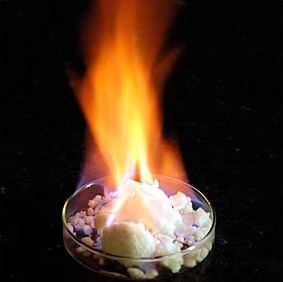
Methane clathrate is a form of water ice that contains a significant fraction of methane molecules caged in the ice crytal mesh. It is unstable at standard pressure and evanesces gradually, but it has the eye catching property that it's flammable. It forms under pressure at low temperatures. At some locations on the sea floor, naturally occurring carbon rain from detritus of plankton and similar life forms decays, producing methane, which creates the conditions for formation of clathrate.

Some of the clathrate may be economically recoverable, and as such may be considered as part of the potential reserves of natural gas. Because methane has 20 times the global wamring potential (more or less) of carbon dioxide, a large release of methane could be a serious matter. A methane release from clathrates is still, as far as I know, a leading candidate for the cause of the Paleocene-Eocene Thermal Maximum of 55,000,000 (error fixed, thanks Penguin) years ago, the previous really drastic global warming event, in which humans obviously played no role.

How did the world suddenly contrive to release all its clathrates? It might have a consequence of some other warming trend, which propagated warm temperatures to the ocean depths, perhaps destabilizing the clathrates. Wikipedia quotes estimates of 1500 Gt carbon released, about triple anthropogenic emissions to date. The extent to which this forcing was multiplied by the extra global warming potential due to the carbon being in methane form depends on the time period over which the release took place.

Archer and Buffet 2004 looked at the global inventory of sea-floor methane and came up with a total on the order of 2000 Gt, about equivalent to economically viable fossil fuel deposits today.

Presuming that most of the clathrate is not economically recoverable, Archer & Buffet argue that the anthropogenic warm signal will propagate down to the depth (below the sea floor) of the clathrates, causing a significant release in the distant future creating a second global warming crisis, that one of longer duration than the one we are now so eager to precipitate.

I know that David was trying to get this work published for quite a while, with a baffling lack of success. I suppose that predictions on a time scale much longer thna a human lifespan are arguably not testable.

Therefore the most salient quote I found remains this abstract from an AGU presentation:
Mechanistic models for the distribution of methane clathrate in marine sediments predict a steady-state inventory of 5000 Gton C. These models also predict a strong sensitivity to changes in ocean temperature. Increasing the ocean temperature by 1.5° C is expected to decrease the steady-state inventory by roughly a factor of 2. The time scale for adjustment to a new steady state is not well known. However, we can parameterize the time-dependent behavior using first-order rate constants. Methane accumulation is expected to occur on time scales of several million years, whereas methane release could be comparatively fast. We calculate the rate of methane release by dividing the clathrate reservoir into fast and slow parts. The fast part responds through slumping of continental margins, whereas the slow part responds by diffusion and oxidation of methane below the seafloor. The evolution of the clathrate reservoir through geologic time is sensitive to the choice of rate constants. When the time scale for the fast part is too short, runaway melting is caused by the positive feedback from radiative forcing (assuming CH4 has oxidized to CO2). Thus the existence of the present-day inventory imposes a constraint on the rate of release. The time scale for accumulation must by greater 5 Myr to avoid unrealistic fluctuations in δ13C during glacial cycles, but shorter than 10 Myr to allow the clathrate reservoir to build up during the geologically recent cooling. The constrained model predicts a methane release of 200 GTon C or less on deglaciations. Future methane releases of 2000--4000 GTon C are expected in response to a 2000 GTon C anthropogenic carbon release. Anthropogenic climate change differs from deglaciations in that it warms the ocean to temperature not seen in millions of years.
Emphasis added.

So this raises an ethical question which economics will "discount" to zero, and which I have trouble accepting as having zero value. Presuming the Archer/Buffett work holds water, what are our ethical responsibilities to the distant future?

Update Sept 3: Alex Steffen takes on the question at WorldChanging . It's short and I'm tempted to paste the whole thing, but Alex deserves the hits. Here are my favorite bits:
Think of this example: If someone set a bomb to go off in a public square 100 years from now, is he committing a crime? Should he be stopped? Almost everyone would say yes. Should he be tried before a court of law and prevented from doing further harm? Most of us would agree that he should.

Now, here's the tricky part: climate change is the bomb, and your great-grandkids are the victims.

...

Put it another way: ethically, our riches are not our own. We hold the planet in trust, and as long as we don't use more of the planet's bounty than can be sustainably provided in perpetuity, we have the ethical right to enjoy the best lives we can create. But the minute we stray into unsustainable levels of consumption, we're not in fact spending our own riches, but those of future people, by setting in motion slow-fuse disasters that will greatly diminish their possibilities.


Unfortunately, nearly everyone in the developed world now enriches their lives at the cost of future generations. As Paul Hawken says, “We have an economy where we steal the future, sell it in the present, and call it G.D.P."
--
Burning ice image via PinkTentacle probably from Asahi.com