I have to admit that it is easier grumbling about a discipline you don't understand than defending the one you do. I hope that our economic discussions here don't look to economists the way Watts Up does to climatologists, and I would really welcome participation by mainstream economists, even to the point of shooting down most of what most of us say, if they had the patience to explain themselves.
Now, Watts, on the other hand, actually tends to remove the most effective counterarguments from his stream. And Liljegren, though scrupulous about including them, eventually decides that one is among those to whom one should be consistently rude and dismissive, thereby discouraging participation. At McIntyre's, that's left to the fans.
So I am left following the skeptics at Curry's and Kloor's. Although much of what they say and do strikes me as strange, they do create an environment where participation by someone like myself is not harshly punished.
I am concerned that, as an economics skeptic, I not end up acting as an economics denialist. I encourage readers to be as polite to newcomers to the conversation as they would be to a human being entering a room, because that is, after all, what is happening. Cogent opposition is the most valuable commodity around.
Of course, the trouble is that non-cogent opposition is much easier to come by, and occasionally hard to get rid of. But being explicitly rude and hostile even to positions you feel have no merit creates an environment where ideas don't get adequately challenged. Saying what you think is not enough. It's best to say what you think and then turn around and doubt it as effectively as you can - to be your own skeptic.
To the extent that we (the numerate climate blog community) meander into territory in which we have little experience, it's possible that we get things badly wrong. We should welcome attempts at correction from people who are steeped in these matters. In politics, it's best to ignore or deflect effective challenges. In science, it's best to welcome them. Above all, the principle this site espouses is that there is a need to bring the scientific culture into policy. I think we should be kind to each other as people and as hard on our own ideas as on each other's.
Saturday, August 6, 2011
Friday, August 5, 2011
Here Comes Sunshine
 If this pans out I believe it will make 30 consecutive days over 100 F here. Climatologically Austin does historically get over 100, about a dozen times a year.
 As I saw somewhere today "100 is the new 90".
(100 F ~= 38 C)
But not to worry, everything is normal.
Climate change is always in the future. What we are seeing is merely weather. It is in the nature of Climate change that you can never observe it because only weather is observable. So everything is fine, Austin will never have a string of days over 110 F, and even when we do it will be a coincidence...
Thursday, August 4, 2011
Growth and Contraction
When talking about "growth", you do have to understand what it is that is growing, as Eli points out on a recent thread. What economists and politicians want to grow is the velocity of money exchanges. This is primarily because that is where all three good things, public revenue, profit and employment, come from. This is called the "gross product", the total of all financial transactions.
Many of the transactions are destructive, but there is enormous pressure to continue. Without being on the selling side of transactions, you are not allowed to be on the buying side. And without being on the buying side, you are essentially not allowed any resources at all, except marginal castoffs.
We have paid very little attention to encouraging that such exchanges actually tend to have a net positive value.
Kindle replaces books at lower capital cost. The paper industry loses jobs. The economy shrinks. The environment benefits. We are better off if we aren't in the paper or ink business. It counts as negative growth.
Craig's list replaces a key profit center of newspapers. Reporters lose jobs, but the rest of us find buyers and sellers of used furniture. New furniture manufacturers face a shrinking market. Negative growth for newspapers, for furniture, for hardwood, for softwood. Consumers are better off for it. It counts as negative growth, contraction.
State and federal taxes are cut, reducing police services in a neighborhood. The neighborhood declines. People who can afford to do so move out at the cost of expense and disruption. Buildings are abandoned and fall into ruin, while new buildings are constructed in the new neighborhood. This is growth.
When this happens you are likely to get a job. When you get a job, you are selling something (your efforts). When you sell things you get to buy things. If you don't get to buy things you are not entitled to them. Therefore you demand policies that create jobs. But nobody checks to see if these jobs are actually a good idea.
The more we successfully replace material goods with ethereal goods, the more jobs will be lost. Thus the more demand there will be to construct conditions where there are more jobs. If we are not careful (and apparently we are not careful) the new jobs are as destructive as the old ones or more so.
The idea that we are in poverty in America is ridiculous. Demand is declining because people have the stuff they want. The problems we are seeing are because we live in a system designed to cope with scarcity encountering surplus. Yet almost everybody wants to restimulate demand.
I'm sorry. I'm still not getting it.
Many of the transactions are destructive, but there is enormous pressure to continue. Without being on the selling side of transactions, you are not allowed to be on the buying side. And without being on the buying side, you are essentially not allowed any resources at all, except marginal castoffs.
We have paid very little attention to encouraging that such exchanges actually tend to have a net positive value.
Kindle replaces books at lower capital cost. The paper industry loses jobs. The economy shrinks. The environment benefits. We are better off if we aren't in the paper or ink business. It counts as negative growth.
Craig's list replaces a key profit center of newspapers. Reporters lose jobs, but the rest of us find buyers and sellers of used furniture. New furniture manufacturers face a shrinking market. Negative growth for newspapers, for furniture, for hardwood, for softwood. Consumers are better off for it. It counts as negative growth, contraction.
State and federal taxes are cut, reducing police services in a neighborhood. The neighborhood declines. People who can afford to do so move out at the cost of expense and disruption. Buildings are abandoned and fall into ruin, while new buildings are constructed in the new neighborhood. This is growth.
When this happens you are likely to get a job. When you get a job, you are selling something (your efforts). When you sell things you get to buy things. If you don't get to buy things you are not entitled to them. Therefore you demand policies that create jobs. But nobody checks to see if these jobs are actually a good idea.
The more we successfully replace material goods with ethereal goods, the more jobs will be lost. Thus the more demand there will be to construct conditions where there are more jobs. If we are not careful (and apparently we are not careful) the new jobs are as destructive as the old ones or more so.
The idea that we are in poverty in America is ridiculous. Demand is declining because people have the stuff they want. The problems we are seeing are because we live in a system designed to cope with scarcity encountering surplus. Yet almost everybody wants to restimulate demand.
I'm sorry. I'm still not getting it.
Wednesday, August 3, 2011

Getting it Right
A polished and, to me, convincing summary of our predicament. Big hat tip to Joe Romm for passing this on.
So do you agree? On the relationship of the debt bubble to the argument that growth has essentially been a charade for decades? On the idea that public debt is a claim on resources?
See, what this does if it holds is kill Keynesianism altogether, from a sustainability viewpoint. It's important because it reveals a contradiction in progressive thought.
I have been saying it is full employment vs sustainability. This video makes a comparable claim that it is debt vs sustainability. It's very compatible; clearly companies take on debt to expand their employment in the hope of expanding future profit. And their way of putting it is a bit less disturbing than mine; we have been taught that employment is an unalloyed good, while we are conflicted about debt.
Both views go against the conventional economic wisdom of liberal economists, Krugmanites. I like these people, and in some ways I like the way they think, but they are so happy with their abilities to manage the infinitesimal that they seem to have lost track of the finite.
Remember that the people most upset about the recent resolution of the Tea Party blackmail are those who believe we should take on more debt, and aim for full high-pay low-skill employment as if this were the heyday of General Motors. But that day is over.
The video doesn't take the necessary step though. An end to growth is an end to full employment.
What we need is to bring back the welfare state, because there are not enough useful jobs for everybody, but everybody deserves dignity. We need to replace wealth with efficiency. Stuff with information. More parks, less yards. More theater, less theaters. More community, less corporation.
Oh, and one last point in closing, the last bloody thing we need in America is to "revitalize the construction industry". Have you counted vacant buildings in your vicinity lately? Anyone who can say this with a straight face (most economists, investors and business reporters) deserves to be slapped in the face with a less-than-fresh fish. That's just stupid.
So do you agree? On the relationship of the debt bubble to the argument that growth has essentially been a charade for decades? On the idea that public debt is a claim on resources?
See, what this does if it holds is kill Keynesianism altogether, from a sustainability viewpoint. It's important because it reveals a contradiction in progressive thought.
I have been saying it is full employment vs sustainability. This video makes a comparable claim that it is debt vs sustainability. It's very compatible; clearly companies take on debt to expand their employment in the hope of expanding future profit. And their way of putting it is a bit less disturbing than mine; we have been taught that employment is an unalloyed good, while we are conflicted about debt.
Both views go against the conventional economic wisdom of liberal economists, Krugmanites. I like these people, and in some ways I like the way they think, but they are so happy with their abilities to manage the infinitesimal that they seem to have lost track of the finite.
Remember that the people most upset about the recent resolution of the Tea Party blackmail are those who believe we should take on more debt, and aim for full high-pay low-skill employment as if this were the heyday of General Motors. But that day is over.
The video doesn't take the necessary step though. An end to growth is an end to full employment.
What we need is to bring back the welfare state, because there are not enough useful jobs for everybody, but everybody deserves dignity. We need to replace wealth with efficiency. Stuff with information. More parks, less yards. More theater, less theaters. More community, less corporation.
Oh, and one last point in closing, the last bloody thing we need in America is to "revitalize the construction industry". Have you counted vacant buildings in your vicinity lately? Anyone who can say this with a straight face (most economists, investors and business reporters) deserves to be slapped in the face with a less-than-fresh fish. That's just stupid.
Tuesday, August 2, 2011
The Rolling Urgency Paradox
We have only ten years to act on climate! Four years ago we only had ten years to act! Ten years ago we only had ten years to act! Twenty years ago, the same!
This is very poor messaging, even though in a sense it is true.
Let me try to explain how this could be true in some sense. Then maybe we can consider how to say this better.
Different processes have different time constants. Suppose you are driving on an isolated mountain road and find yourself low on gas. This is an urgent concern. If you don't come across some fuel in the next hour or so you will be stranded. Then you go round a bend and see a truck barreling down toward you straddling the center line. This is an urgent concern, and you have three seconds to figure out what to do about it. See how the urgency is related to the problem?
The earth is a much larger system than those of our mundane concerns. Larger systems tend to have longer time constants associated with them. Remember how LONG it took for the World Trade Towers to actually fall? That's mostly because they are much larger than things we ordinarily see falling. To the earth, ten years is an instant. Much less than ten years doesn't really allow for a significant change in greenhouse gas concentrations. The climate, at least in its ordinary state, usually takes about thirty years to wander through its ordinary configurations. By ten years, in geophysical sense, we essentially mean "really really fast" though in political contexts it seems like eons.
In 1992, the world agreed that it was necessary to start getting a handle on CO2 emissions soon, such that they did not rise much over 1992 levels and returned to those levels by 2010. Had we achieved that, there would be substantially less carbon in the atmosphere now, and substantially less draconian cuts needed. 1992 was pretty much the last minute to deal with the problem cheaply and at modest risk.
Each decade that passes has increased the risk and the steepness of how fast the risk rises over time, especially given that our actual performance has been so far off what we agreed we needed to do. So we are now to the point that we need to reduce greenhouse gas emissions (especially CO2 and methane) as quickly as is feasible. Here feasibility is set by the sunk costs in existing infrastructure. As quickly as is feasible amounts to abandoning carbon emitting infrastructure in favor of other infrastructure whenever possible, and adding no new capacity.
Drill noplace, drill never!
It's incredibly counterintuitive to say this in Texas. It really is seen as close to insane. I understand this. I have friends and acquaintances for whom the spigot just turned on. I have a hard time wishing their good fortune to end.
And I understand that we still have all that automotive infrastructure to feed at the least, and the existing supplies won't last forty years, so, well, so it's hard to say exactly what activities to stop when. This is why we need to think quantitatively and collectively. And nobody with any stake in the fossil fuels will welcome such collective wisdom, I promise you that!
So we're stuck where we are, in a great hurry and caught like deer in headlights, if you'll pardon the cliche, motionless, paralyzed.
Yet we only have ten years to act. Ten years until what? That's the question.
Until the costs get substantially higher and the risks get substantially worse. It's always ten years. And that's longer than an election cycle. And so nothing gets done.
"We only have ten years to act" will remain true until we act, or until our inaction does us in, whichever comes first. But it sounds bogus and incoherent and inconsistent, just the same. We need another way of putting this.
This is very poor messaging, even though in a sense it is true.
Let me try to explain how this could be true in some sense. Then maybe we can consider how to say this better.
Different processes have different time constants. Suppose you are driving on an isolated mountain road and find yourself low on gas. This is an urgent concern. If you don't come across some fuel in the next hour or so you will be stranded. Then you go round a bend and see a truck barreling down toward you straddling the center line. This is an urgent concern, and you have three seconds to figure out what to do about it. See how the urgency is related to the problem?
The earth is a much larger system than those of our mundane concerns. Larger systems tend to have longer time constants associated with them. Remember how LONG it took for the World Trade Towers to actually fall? That's mostly because they are much larger than things we ordinarily see falling. To the earth, ten years is an instant. Much less than ten years doesn't really allow for a significant change in greenhouse gas concentrations. The climate, at least in its ordinary state, usually takes about thirty years to wander through its ordinary configurations. By ten years, in geophysical sense, we essentially mean "really really fast" though in political contexts it seems like eons.
In 1992, the world agreed that it was necessary to start getting a handle on CO2 emissions soon, such that they did not rise much over 1992 levels and returned to those levels by 2010. Had we achieved that, there would be substantially less carbon in the atmosphere now, and substantially less draconian cuts needed. 1992 was pretty much the last minute to deal with the problem cheaply and at modest risk.
Each decade that passes has increased the risk and the steepness of how fast the risk rises over time, especially given that our actual performance has been so far off what we agreed we needed to do. So we are now to the point that we need to reduce greenhouse gas emissions (especially CO2 and methane) as quickly as is feasible. Here feasibility is set by the sunk costs in existing infrastructure. As quickly as is feasible amounts to abandoning carbon emitting infrastructure in favor of other infrastructure whenever possible, and adding no new capacity.
Drill noplace, drill never!
It's incredibly counterintuitive to say this in Texas. It really is seen as close to insane. I understand this. I have friends and acquaintances for whom the spigot just turned on. I have a hard time wishing their good fortune to end.
And I understand that we still have all that automotive infrastructure to feed at the least, and the existing supplies won't last forty years, so, well, so it's hard to say exactly what activities to stop when. This is why we need to think quantitatively and collectively. And nobody with any stake in the fossil fuels will welcome such collective wisdom, I promise you that!
So we're stuck where we are, in a great hurry and caught like deer in headlights, if you'll pardon the cliche, motionless, paralyzed.
Yet we only have ten years to act. Ten years until what? That's the question.
Until the costs get substantially higher and the risks get substantially worse. It's always ten years. And that's longer than an election cycle. And so nothing gets done.
"We only have ten years to act" will remain true until we act, or until our inaction does us in, whichever comes first. But it sounds bogus and incoherent and inconsistent, just the same. We need another way of putting this.
Computational Prediction Lecture
Well, I went to the Austin Forum talk as promised, "a presentation by J. Tinsley Oden on predictive computational science. In this talk, Oden traces the development of scientific thinking and philosophy that underlie predictivity" and about a third of it was tantalizingly close to being interesting. It really looked like it was leading up to some substantial insights, but then it sort of fizzled into a tired supercomputing pep talk.
First my favorite slide:

Yes. Although Oden allowed that this might have been slightly tongue-in-cheek on Eddington's part, it is really important to emphasize that purely empirical science is a bore; that the ability to collect numbers and plot them on graphs is a very long way from the pinnacle of science.
This was in the context of the computation enthusiast's claim that computation is a third pillar of science, joining observation and theory as a coequal. I think this is possible but a long way off, and Oden did talk about some spectacular failings of modeling in a frank way, except that implicitly but notably none of those were at the University of Texas.
Another refreshing point was his antidote to the grade-school model of the scientific method, and the Popperian model for which he had equally little use. He offered this view of What Science is Like. I think it has a lot more merit than the gross oversimplifications that most nonscientists are taught to believe in in grade school.

Sorry, it's a bit blurry but I think you get the idea. (You can click on the images for a clearer view.)
Before indulging in twenty minutes of tedious cheerleading for TACC and ACES (our local supercomputing institutions) he offered the following four guideposts:

Translation:
V & V = Verification and Validation = (respectively) a) is it the right system for the purpose and b) does the software actually model the system?
QofI: Quantity of Interest = The "answer", the quantity or quantities you want to predict
UQ = Uncertainty Quantification: estimated error statistics of the predicted quantity
This seemed to be a good place to launch into some substance but that's as far as he got.
Note this talk was not about climate models but about predictive models in general. He certainly didn't get into the differences between prediction types, where climate models present some unusual philosophical problems.
I left feeling that I had seen a very fine meal but had not actually tasted it.
To be fair he actually did show Bayes' theorem and talked about it for a couple of minutes.
I really think there is some alternate universe where quantitative public talks are given to nonexperts who nevertheless can be expected to know fundamentals such as Bayes' theorem like their own phone number. Somewhere over the rainbow I suppose.
Update via rpenner at Stoat: Slides are at http://www.austinforum.org/presentations/oden.pdf
First my favorite slide:

Yes. Although Oden allowed that this might have been slightly tongue-in-cheek on Eddington's part, it is really important to emphasize that purely empirical science is a bore; that the ability to collect numbers and plot them on graphs is a very long way from the pinnacle of science.
This was in the context of the computation enthusiast's claim that computation is a third pillar of science, joining observation and theory as a coequal. I think this is possible but a long way off, and Oden did talk about some spectacular failings of modeling in a frank way, except that implicitly but notably none of those were at the University of Texas.
Another refreshing point was his antidote to the grade-school model of the scientific method, and the Popperian model for which he had equally little use. He offered this view of What Science is Like. I think it has a lot more merit than the gross oversimplifications that most nonscientists are taught to believe in in grade school.

Sorry, it's a bit blurry but I think you get the idea. (You can click on the images for a clearer view.)
Before indulging in twenty minutes of tedious cheerleading for TACC and ACES (our local supercomputing institutions) he offered the following four guideposts:

Translation:
V & V = Verification and Validation = (respectively) a) is it the right system for the purpose and b) does the software actually model the system?
QofI: Quantity of Interest = The "answer", the quantity or quantities you want to predict
UQ = Uncertainty Quantification: estimated error statistics of the predicted quantity
This seemed to be a good place to launch into some substance but that's as far as he got.
Note this talk was not about climate models but about predictive models in general. He certainly didn't get into the differences between prediction types, where climate models present some unusual philosophical problems.
I left feeling that I had seen a very fine meal but had not actually tasted it.
To be fair he actually did show Bayes' theorem and talked about it for a couple of minutes.
I really think there is some alternate universe where quantitative public talks are given to nonexperts who nevertheless can be expected to know fundamentals such as Bayes' theorem like their own phone number. Somewhere over the rainbow I suppose.
Update via rpenner at Stoat: Slides are at http://www.austinforum.org/presentations/oden.pdf
I Try to Sympathize
I try to sympathize with the dyed-in-the-cotton southerners, but then somebody manages to say something like this.
Texas’ grid operator declared a Level 1 Energy Emergency Tuesday afternoon as record heat across the state led to the second consecutive day of record power use.We aren't all like that, really. But I'm afraid some of us are like that. I don't really want the rest of the world bombing us back to the stone age but I can understand the temptation, too.
...
“We are requesting that consumers and businesses reduce their electricity use during peak electricity hours from 3 to 7 p.m. today, particularly between 4 and 5 p.m. when we expect to hit another peak demand record,” said Kent Saathoff, ERCOT’s vice president of system planning and operations. “We do not know at this time if additional emergency steps will be needed.”
...
“NO!” shouted ‘Ed C.’ “What part of that do you not understand? I will now go cut my thermostat down and run my dryer just because you told me not too. Fix the PROBLEM liberal democrats! Get off your rear and do something about it!”
Monday, August 1, 2011
Obama Budget Deal
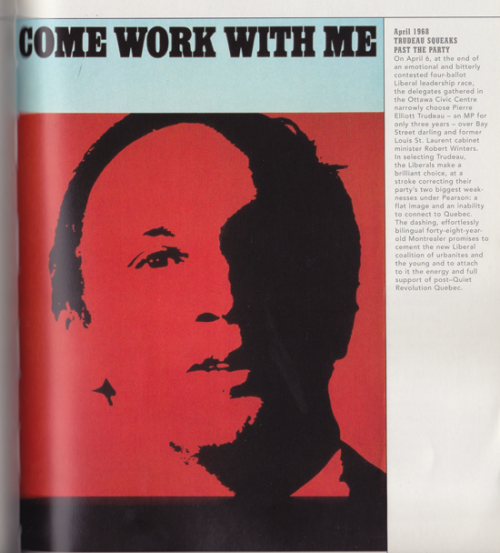 Obama still reminds me of Trudeau. The original one. Just the smartest guy in the room by a long shot, and different, which drives all the interchangeable grey suits crazy.
Many people are reading Obama's moves wrong, I think. He really did get something out of the deal. See here and here.
The White House official summary is here.
The idea that this doesn't raise taxes is wrong. Obama gets to veto an extension of the Bush Jr. tax cuts:
The Enforcement Mechanism Complements the Forcing Event Already In Law – the Expiration of the Bush Tax Cuts – To Create Pressure for a Balanced Deal: The Bush tax cuts expire as of 1/1/2013, the same date that the spending sequester would go into effect. These two events together will force balanced deficit reduction. Absent a balanced deal, it would enable the President to use his veto pen to ensure nearly $1 trillion in additional deficit reduction by not extending the high-income tax cuts.Liberal Democrats as usual are declaring defeat but I guess I don't see why. Maybe it's because the press is garbling it. But remember, that's their job.
Subscribe to:
Posts (Atom)

